For an entirely different whole
Principles of solidary trade

1. Agreement on good raw coffee prices
In line with our mission, we pay the best possible price for small-scale farmers' and cooperatives' work. We believe social standards and funding are as important as high coffee quality and sustainable processing. In the spirit of solidarity, we are paying more than the Fairtrade minimum price for raw coffee.
2. Long-term cooperation - fixed purchase volumes
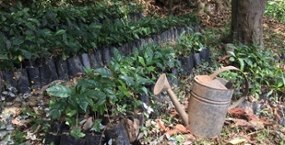
Café Libertad offers advance financing of future harvests to partner co-ops up to 60% of the total amount by concluding preliminary contracts. These funds are earmarked for purchasing co-op members' coffee and preparing exports. Premiums support the implementation of sustainable cultivation methods and organic production.
3. Sponsoring and supporting the establishment of co-ops
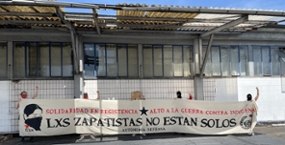
The economic situation and the degree of self-organisation are exercising considerable influence on protest movements' foundations. We don't participate in Fairtrade seals because we refuse to 'invest' in supermarket chains' marketing campaigns or distribution structures. We prefer to support our partner co-ops, like Zapatista communities in Chiapas or women's co-op Aprolma in Honduras, directly by funding. Since 1999, we have supported Zapatista communities, our partner co-ops, and other projects, disbursing 450.000 Euro. Additionally, we have transferred many smaller amounts to oppositional, queer-feminist, or anti-racist structures.
4. Direct distribution - involvement of customers
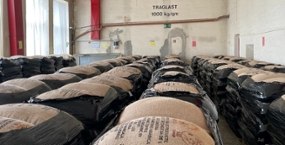
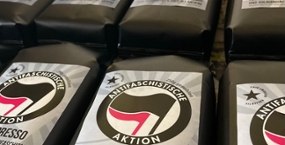
Direct distribution is an important part of Café Libertad Kollektiv's concept. Resale takes place in world shops, health-food shops, and bookstores, which charge their own premiums. However, customers can also order directly from Café Libertad or shop at depots in several cities, where we sell our coffee at the Café Libertad price without surcharges.
5. Communication and political discussion
Direct import, the tightest possible interconnection of production, distribution and consumption, does not only enforce consciousness of mutual interests but is at the same time promoting transparency between different protagonists. Besides coffee import, we are involved in unpaid political work, e.g. at information meetings or solidarity activities.
6. You cannot buy a better world – make yourself part of the movement
A crucial point of the idea of solidary trade is considering not merely trade relations but all conditions of society in a global perspective. Solidary trade isn't neutral; it takes an active position and makes itself part of local struggles and social movements worldwide. The emphasis is on learning from shared experiences, discussing critical questions collectively, and questioning one's own point of view self-critically.
7. Considering local conditions
Increasing poverty, even in Europe, is negatively affecting fair and solidary trade. Therefore, reasonable consumer prices are essential: solidarily traded coffee should not be a luxury good for well-off buyers but must be available to as many people as possible. In this view, alongside de-colonialisation of relationships and the shortest possible route from producer to consumer, social movements against marginalisation, exploitation, and unacceptable working conditions are required. Equally important, in our opinion, are refugees' rights and the abolition of the European border regime, which is penetrable for goods and investment but closed to people fleeing the consequences of global trade, such as climate change, war, or poverty. United we stand!