Funding amounts, projects and criteria
About funding
An indispensable part of solidary trade's self-conception is direct support of cooperatives and social movements. As a co-op, Café Libertad Kollektiv doesn't generate commercial revenue. Any surpluses are allocated to the cooperative’s reserves, and approximately 100,000 euros are distributed annually as funding that is firmly budgeted for and advertised accordingly. To support this, we include funding in our coffee price and distribute it according to our coop's funding criteria. This regularly amounts to euro 0,40 per kg; for special extra solidarity coffees, this share can increase to euro 2,40 per kg. This solidarity is made possible by everyone who drinks our coffee.
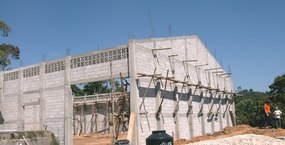
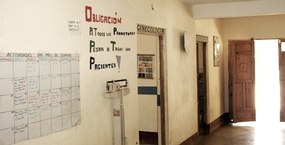
The majority of funding goes to Chiapas solidarity, the establishment and autonomy of Zapatista communities, and support for coffee cooperatives. We have supported the construction of hospitals, schools, and community buildings, as well as the co-ops' purchase of coffee-processing machines and the fight against climate change-induced coffee plant diseases. In 2023 and 2024, a further 37,000 euros was channelled into the Gira Zapatista, as part of which around 180 Zapatista and other indigenous community representatives toured the European continent.
Through additional funding sources, Café Libertad Kollektiv also supports projects in other countries, as well as social protests and political movements here at home. Key to this are, on the one hand, the ‘Störtebeker’ coffee, with a mark-up going towards self-managed and radical left-wing projects, and, on the other hand, a funding stream earmarked for queer-feminist causes, which is funded through the ‘Las Chonas’ coffee and espresso from the Aprolma women’s cooperative in Honduras.
From this transnational perspective, we have supported the work of the indigenous organisation COPINH in Honduras, fighting for the rights of the indigenous population, or the transgender organisation Arcoiris. Additionally, we have supported the establishment of new collectives and the development of a solidary economy, e.g., the CACITA project in Oaxaca/Mexico, the squatted vio.me factory in Greece, and the media collective Synapsis from Chile. Support was also provided to social centres and squats, for example in the Philippines and Greece. Further funds went to strikers and those affected by repression, to industrial action by textile workers in Asian countries, to neighbourhood-level self-help groups, for example in Istanbul, or by migrant sex workers and people living with HIV in Athens, as well as to LGBTI* and FLTI* self-organisation projects in Central and South America, and also in Rojava, Syria, Iraq and India.
In 2024, we also provided extensive financial support to all the coffee cooperatives with which Café Libertad works, to enable them to meet the requirements of the new European regulation on deforestation-free supply chains. Among other things, this requires the geolocation of cultivation areas, for which technical equipment and the relevant expertise are necessary. Whilst we criticise the EU regulation because it fails to take account of the realities faced by indigenous smallholders and cooperatives, undermines their livelihoods and fuels land conflicts and repression, the ability to continue exporting coffee to the EU – and, in particular, to secure good and stable prices within the framework of fair trade – is a key prerequisite for indigenous self-organisation and autonomy.
Migration, in particular, has been and remains an important issue for us in the context of global questions concerning forms of economy based on solidarity. We have therefore provided several thousand euros in recent years as emergency aid to support the self-organisation of refugees and have backed initiatives that counter the systematic brutality of the European border regime with solidarity and humanity.
Many other smaller grants have been channelled into social movements, particularly in German-speaking countries: they went to protest camps and other political gatherings, to anti-fascist and anti-racist groups, to queer-feminist initiatives, and to political, cultural and media projects. Given the current trends towards an authoritarian shift to the right, self-organisation based on solidarity from the grassroots up is perhaps more important than ever, even here in this country.
Another independent funding initiative is “St. Pauli Roar”, which, since 2012, has been working with FC St. Pauli fans and local political activists to sell a “solidarity espresso” that supports anti-racist projects and the “Right to the City” movement. The Roar group makes autonomous decisions about how to allocate funding from here to the St. Pauli district, Hamburg, and beyond.