Plant diseases and thunderstorms resulting in crop failure
Social and political consequences of global warming
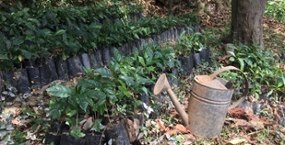
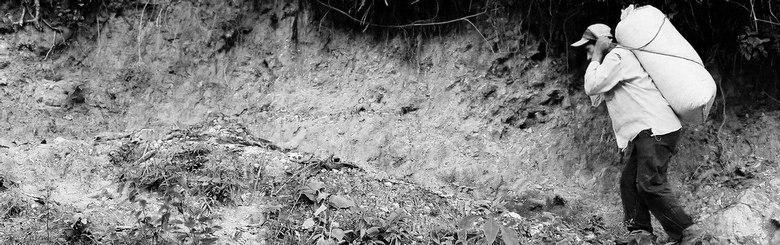
At first, all you can see is a tiny yellow dot on the green leaf. Finally, no leaves remain, and the twigs rise into the air like naked arms. Roya is a fungal disease affecting coffee plants and is currently causing dramatic crop failure, as the plant is losing not only its leaves but also its berries.
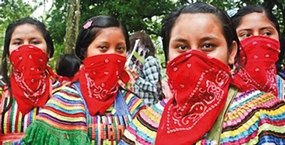
In Mexican Chiapas, rebellious Zapatista communities complain about crop failure of up to 75 per cent that threatens not just Zapatista coffee co-ops' autonomy but also small-scale farmers' existence.
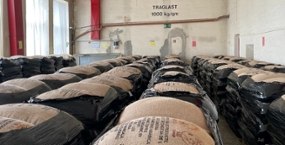
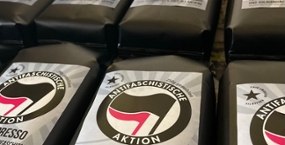
A cup of coffee could tell quite a story...
…for instance, about social injustice as a consequence of industrialisation and world trade. While the reasons for the above-mentioned plant disease are certainly manifold, a major cause of its current scale is the warmer climate driven by increasing CO2 emissions from industrialised countries. Plantation economies and monoculture in rural industries also contribute to the spread of plant disease. Additional damage comes from thunderstorms and hurricanes accompanied by heavy rainfall and high wind speeds.
When a plant is infected, beyond applying pesticides, a radical cure seems adequate: removal or complete pruning, hoping to preserve at least neighbouring coffee trees. Recently, there has been success in spraying plants with another fungus that impedes the spread and growth of the Roya fungal disease that destroys the plant. However, this does not at all solve the problem in general.
We can learn something from the coffee example.
Climate change and its consequences are aggravating global injustice. Historically, climate change has always had extensive social consequences. Bad harvests, famines, and diseases, as well as conflicts and wars driven by competition for resources, have been accompanied by migration movements in early history or are due to climate change, such as the so-called Little Ice Age in the Middle Ages. Similar developments can be observed in the context of current global warming.
Thunderstorms and crop failures have always occurred, but extreme weather phenomena and their consequences are increasing. Conflicts over access to water also carry increasing potential for conflict and war. Additionally, increasing desiccation and desertification in many regions of the world are dispossessing people of their means of livelihood and are forcing them into migration. In many cases, therefore, the causes and reasons behind refugee movements are ultimately a product of the Global North.
Therefore, it is even more important to understand protests against climate change not just as protection of resources and the environment but as one of the most crucial political demands for participation and justice. Many indigenous communities have already addressed this in their struggles.