Costa Rica, Puntarenas
Finca Sonador & CoopeAgri
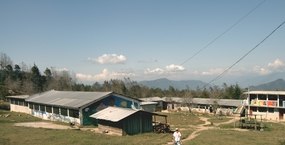
Finca Sonador is a project of the European Longo Mai network focused on collective living and rural self-sufficiency. It also implements various social and political projects. Finca Sonador exports in cooperation with the great cooperatives' association CoopeAgri.
In 1979, when many people were forced to flee Anastasio Somoza's terror regime in Nicaragua, the Longo Mai cooperative decided to purchase Finca Sonador in Costa Rica, the general idea being to provide land to refugees and thereby empower them to lead their lives independently.
After the Sandinistas' victory, most Nicaraguans returned. Refugees from the El Salvadoran regime's violence took their places. Additionally, indigenous and landless Costa Rican families were moving to Finca Sonador, participating in its social life and cultivating their own land.
At Finca Sonador, the focus is on communal living based on self-governance and agricultural self-sufficiency. Great importance is also attached to the protection of the rainforest areas belonging to the finca and to the diversification of secondary forest management. In addition, the community carries out a wide variety of social and political projects.
Political situation and problems of Costa Rican coffee production
Costa Rica is considered one of Central America's comparatively safe countries and is enjoying a higher standard of social security than its neighbours. Costa Rica not commanding its own military has had a generally positive impact on the security situation, including the absence of military coups and civil wars prevailing in several neighbouring countries. However, strong, well-armed border patrols are supposed to prevent immigration into the country and subsequent transit to North America. In the border region, conflicts and violence against refugees are therefore occurring regularly.
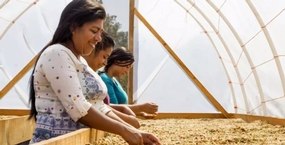
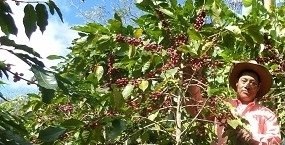
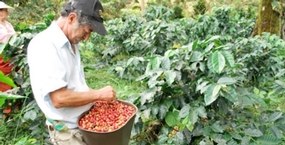
Like in many other countries, coffee cultivation in Costa Rica is endangered by Roya. More than half of Central America's 933,000 hectares of coffee cultivation are affected by the fungus, threatening many people's livelihoods. Additionally, many coffee corporations are moving to the region's poorer, low-wage countries because of higher living costs and, therefore, higher coffee prices in Costa Rica. Thus, coffee corporations directly and indirectly favour corrupt regimes and human rights abuses in neighbouring countries, while exerting fierce competition and financial pressure on coffee-producing cooperatives and their members.
Sustainability, biodiversity and self-sufficiency
Whereas the coop's emphasis was on providing space for self-organisation to civil war refugees from Central America during the eighties, today the community is increasingly developing into an ecological centre and a laboratory for alternative cultivation methods.
Corn, beans, rice, manioc, bananas, plantains, fruit, etc. are produced for the village's self-sufficiency, with market-oriented cultivation focusing on coffee and sugar cane. Longo Mai covers about 900 hectares, half of which the community sustainably protects as rainforest. Two Pulperias (general stores), a school, and a kindergarten provide for the needs of the 400 inhabitants. Numerous committees organise infrastructure and various activities through a voluntary division of labour.